
Running successful paid campaigns is not just about money – it’s about catching the right phrases when they matter most. You might think Google Ads or bing Ads are enough, but even small tweaks in keyword selection shift returns dramatically. Thing is, these tools don’t just list ideas, they dig into what people actually type, show how much competition exists, and point out which ones convert. We’ve tested six solid options for real-world results. They work whether you’re new to ads or have been doing this for years. That’s why they matter now more than ever.
Why PPC Keyword Research Is Essential to Ad Success
Before looking at some of these tools first let’s outline the reasons why keyword research is a major part of PPC campaign success.
Better Targeting and Higher ROI
The right keywords not only help in reaching the audience with the highest propensity to buy but also enable better return on ad spend (ROAS).
Reduced Wasted Ad Spend
Incorrect keywords to target can sometimes attract unrelated clicks. PPC keyword tools can help identify such low-intent searches and also for figuring out negative keywords.
Competitive Advantage
By studying your rival’s keywords, you can both uncover silences in the market and areas where you can be superior to them.
What Features Should the Best PPC Keyword Tools Have?
Bear in mind, tools are different in quality. Here is a list of main aspects you really need to focus on:
Keyword Volume and CPC Data
The right choice and usage of keywords depend on having truthful search volume along with click costs data.
Competition Analysis
Understanding the level of difficulty to rank for a certain keyword as well as what competitors are up to is vital.
Keyword Suggestions and Variations
You might want to check out if a tool can supply you with different types of keywords including long-tail ones and also those that are semantically related.
Negative Keyword Discovery
As well as getting the right queries, you also need to exclude the irrelevant ones.
The 6 Best PPC Keyword Tools for Marketers
Let’s take a look at the top tools that can really change your paid campaigns.
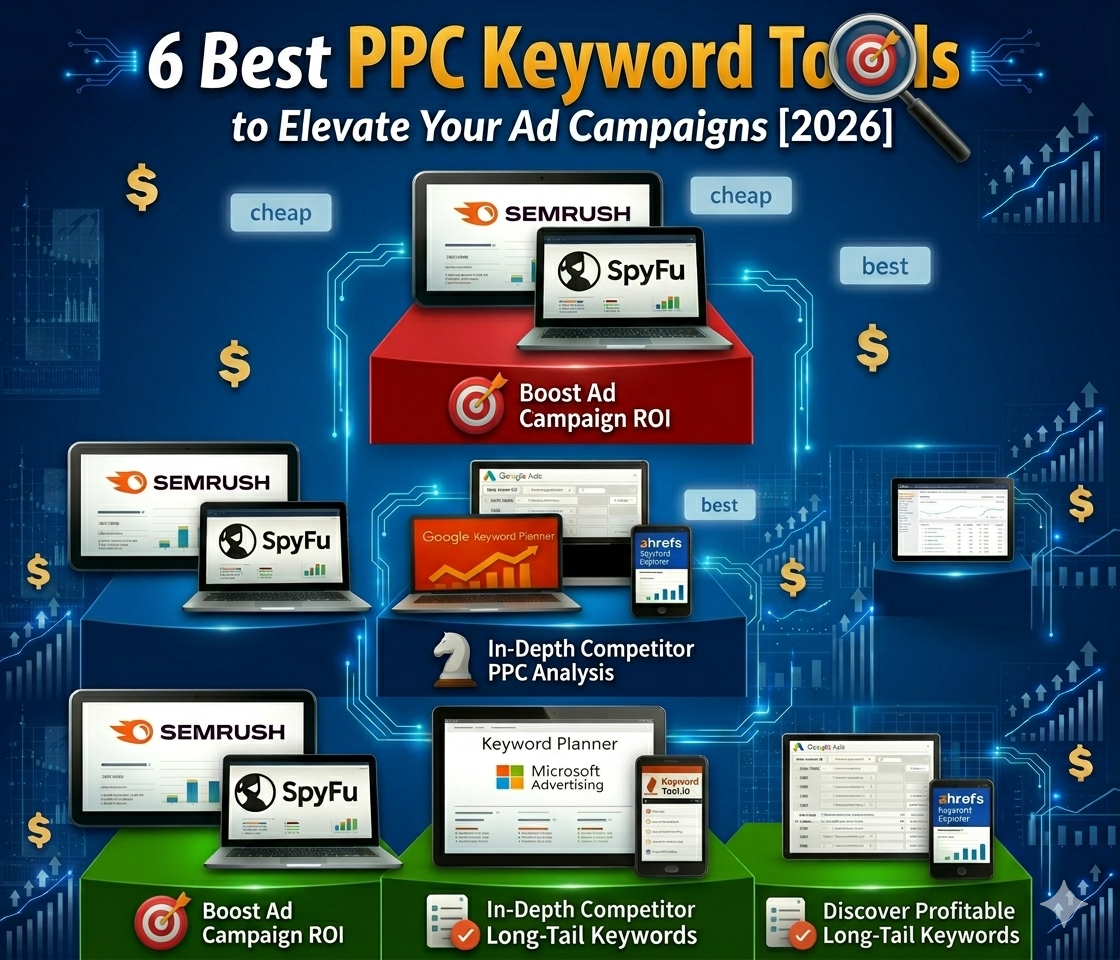
![6 Best PPC Keywords Tools to Elevate your Ad Campaigns [2026]](https://news.truestorydaily.com/wp-content/uploads/2026/04/The-6-Best-PPC-Keyword-Tools-to-elevate-Your-Ad-Campaigns-1024x559.png)
Google Keyword Planner:
Perfect for: Marketing beginners and Google Ads users.
Google Keyword Planner remains a widely popular PPC keyword research tool for a number of reasons. What makes it attractive is that it is free, plus Google Ads features direct integration.
Highlights: What makes it different: The fact that data is coming straight from Google makes it a very trustworthy tool for setting up ad campaigns.
Limitations: When it comes to competitive analysis, it is quite basic and not in the league of the premium tools.
SEMRUSH:
Best for: All-in-one PPC and SEO strategy.
SEMRUSH is a digital marketing tool that greatly supports both SEO and PPC campaigns with the most competent analysis of organic and paid keywords.
Highlights: It is appealing because: You have the opportunity to look at competitors’ advertisements and find out which keywords they are focusing on that are generating the most traffic.
Limitations: Newcomers might find it a bit difficult to use due to the abundance of features.
Ahrefs Keywords Explorer:
Ideal for: Best data accuracy and keyword depth.
Ahrefs has made a name for itself with a strong database and accurate keyword metrics, thus having a good chance of making the list of top PPC keyword tools.
Main Features:
– Click metrics (not just search volume)
– Keyword difficulty and traffic potential
– SERP analysis
– Global keyword database.
Why You Should Choose It: It shows you data on actual clicks, so you are not just looking at how many searches there are but how many people are actually getting through to the website.
Limitations: Mostly aimed at SEO, although it can be very effective for PPC as well.
SpyFu:
Best for: Competitor intelligence
SpyFu has been really built around finding out what competitor strategies are, so it is the PPC advertisers’ first choice.
Main Features:
– Track competitor keywords
– Archive of ad content
– Experiencing PPC campaign
– Estimations regarding budget and bids
What makes it different: SpyFu allows you to discover the keywords your competitors have been purchasing ads for over the years, which gives you the upper hand.
Limitations: The interface of the tool may seem a bit outdated compared to the state-of-the-art tools.
Ubersuggest:
Best for: Affordable keyword research
Ubersuggest is a great option if you are a freelancer or a small enterprise trying to find a low-cost alternative.
Major Features:
– Suggestions for keywords and content
– CPC and competition data
– Quick glance at a domain
– SEO and PPC statistics
Why You Should Choose It: This tool offers strong value for its price. It doesn’t pack the depth of top-tier options though.
Limitations: The richness of information is less than what can be found in high-end tools.
KeywordTool.io:
Best for: Long-tail keyword discovery
KeywordTool.io is a great tool that can help you find very specific keywords (long-tail keywords) not just on Google but also on other platforms such as YouTube Amazon etc.
Main Features:
- Keyword suggestions using autocomplete
- Multi-platform keyword research
- Long-tail keyword discovery
- Question-based keywords
What Makes it Different: Great for uncovering niche, low-competition keywords that are great for conversion in PPC campaigns.
Limitations: Getting access to the entire data set will necessitate the purchase of a subscription.
| Tool Name | Best For | Pricing | Key Strengths | Limitations |
| Google Keyword Planner | Beginners & Google Ads users | Free | Accurate Google data, easy integration | Limited competitor insights |
| SEMrush | All-in-one marketing | Paid (Premium) | Competitor analysis, keyword gap, ad research | Expensive for beginners |
| Ahrefs | Data accuracy & depth | Paid (Premium) | Click metrics, large database, SERP analysis | More SEO-focused than PPC |
| SpyFu | Competitor intelligence | Paid (Affordable) | Historical PPC data, competitor tracking | Slightly outdated interface |
| Ubersuggest | Budget users | Freemium | Affordable, simple UI, keyword suggestions | Limited data compared to premium |
| KeywordTool.io | Long-tail keyword research | Freemium | Multi-platform keywords, autocomplete insights | Full features require paid plan |
How to Use PPC Keyword Tools Effectively
Having access to tools is one thing strategically using them is what really leads to results.
Combine Multiple Tools:
Since no single tool offers everything, it’s better to mix and match the tools to validate the data and explore the insights deeper.
Focus on Intent:
First and foremost identify with keywords which have strong commercial or transactional intent (e.g. “buy, ” “best, ” “discount”).
Negative Keywords Usage:
Identifying and filtering out the non-performing keyword terms is one of the methods to upgrade the traffic and conversions quality.
Always Keep Testing and Optimizing:
Keep testing different keywords for your campaigns and based on the results change them to your advantage for maximum efficiency.
Common Mistakes to Avoid in PPC Keyword Research
Even the best PPC keyword tools cannot save you from mistakes that can harm your campaigns.
Disregarding Long-Tail Keywords:
Usually, these keywords are very specific and have buying intent. Also, some of these keywords have very low competition.
Overlooking Competitor Data:
If you decide not to analyze your competitors, you could be missing out on really helpful insights.
Targeting Broad Keywords Only:
This is a classic mistake of throwing money on keywords which you are not certain will get you any conversions.
Not Updating Keyword Lists:
Just like your audience, the search trends are constantly changing and so should your keyword strategy.
Final Thoughts: Choosing the right PPC Keyword Tool
Analyzing tools isn’t about which ones have flashier interfaces – it’s about what fits your needs.
Searching for basics? Google Keyword Planner works fine – easy to use and free.
Digging deeper into search trends? SEMrush or ahrefs give strong data.
Want to track rivals closely? SpyFu offers detailed competition reports.
On a tight budget? Ubersuggest cuts costs without losing quality.
Need long-tail phrases? KeywordTool. Io finds niche terms efficiently.
The mix of features helps shape better ads. Spending drops when strategies are tuned. Conversions rise with sharper targeting.
Frequently Asked Questions:
Q1. Which is the best PPC keyword tool for beginners?
Google Keyword Planner stands out here. Beginners trust it more than others. This is because it is free, very user-friendly, and the data you get is highly reliable as it comes directly from Google Ads.
Therefore, it is a great tool for starting your first campaigns.
Q2. Are paid PPC keyword tools worth it?
Indeed, paid PPC keyword tools such as SEMrush and Ahrefs do have their merits if you wish to gain in-depth insights.
They provide you with the ability to analyze your competitors, identify your keyword gaps, and access to detailed metrics which are likely to enhance your campaign effectiveness and ROI.
Q3. Can I use multiple PPC keyword tools together?
Absolutely, it is very much advisable to use multiple PPC keyword tools. A mix of tools such as Google Keyword Planner, SEMrush, and KeywordTool.io enables you not only to verify the accuracy of your data but also to discover more profound insights and create a more efficient keyword plan.